


Projekte
Brand Globe
Evert Ypma, 2014
Ausstellungsbeitrag
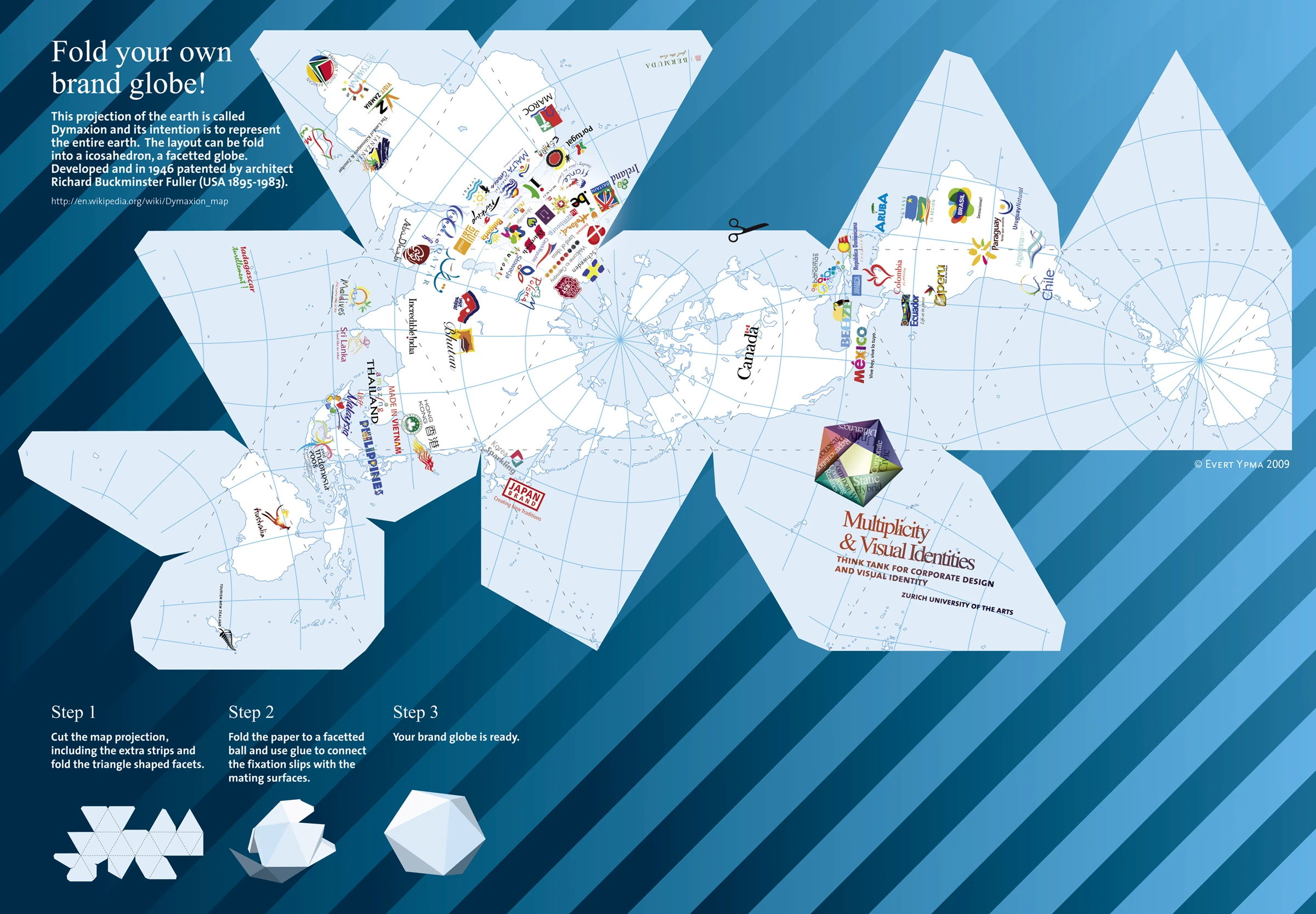
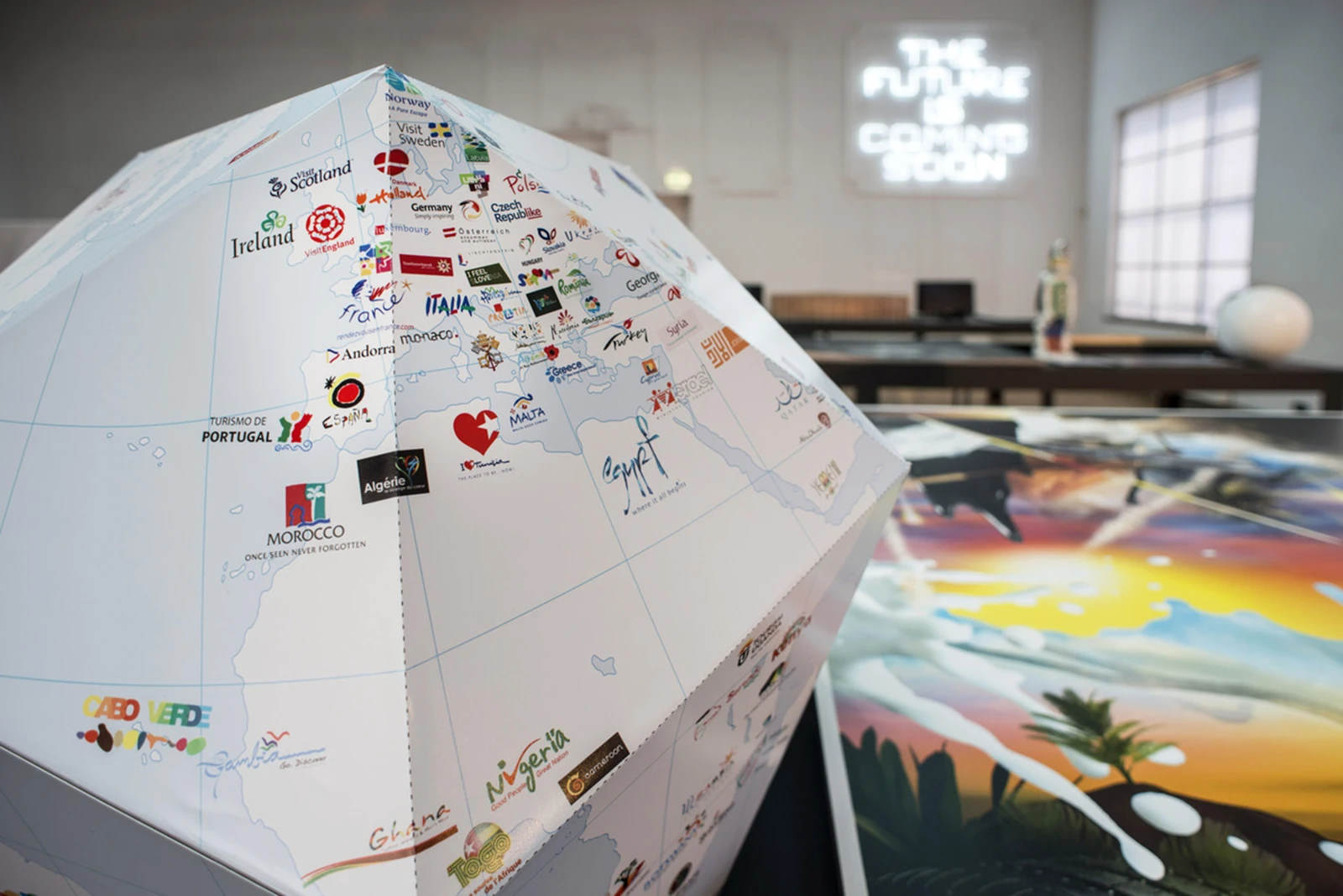
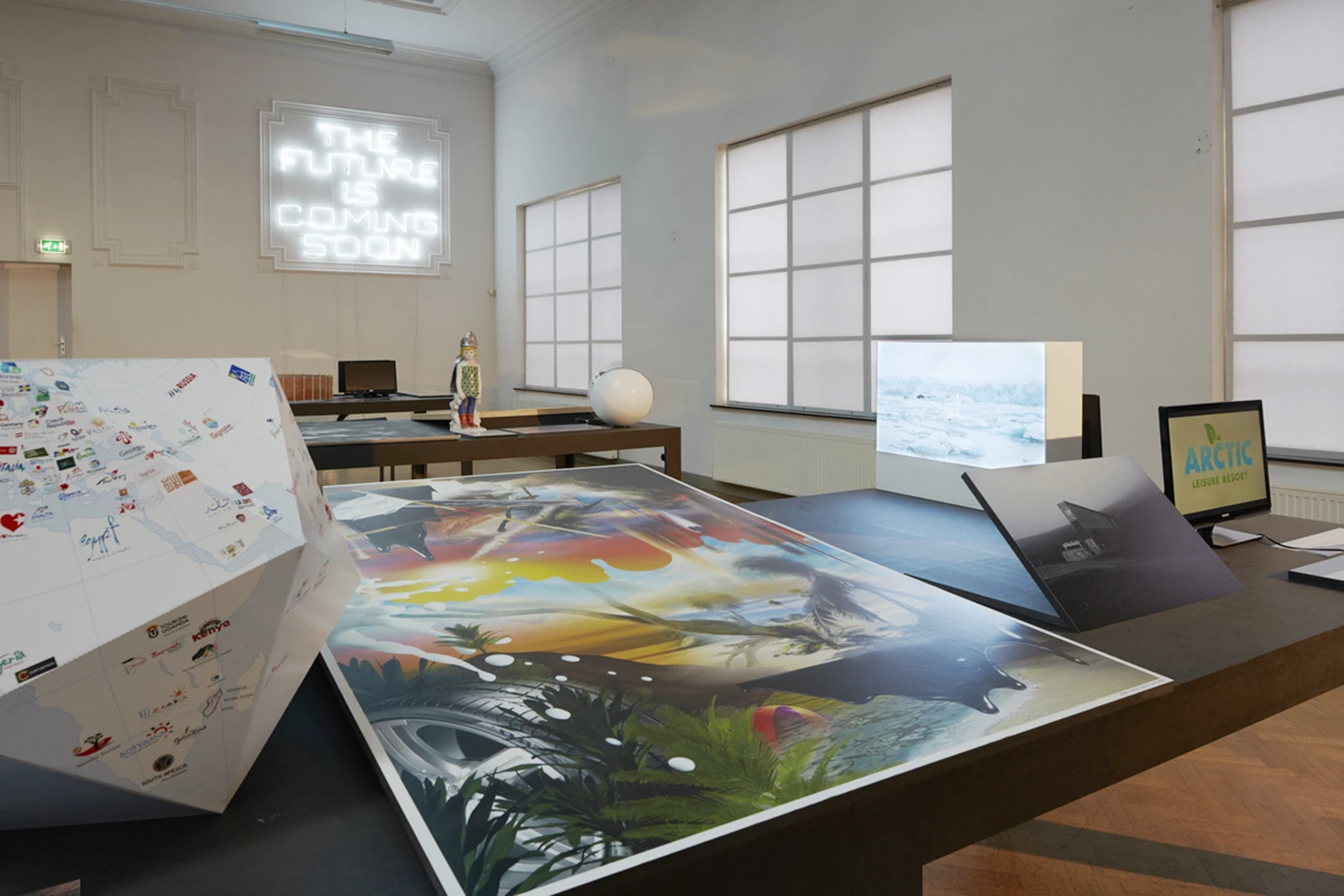
Brand Globe untersucht Place Branding als eine machtvolle Form kollektiver Identifikation: als visuelle Sprache, durch die sich Länder und Regionen in einer zunehmend vernetzten Welt erkennbar machen. Präsentiert auf einem facettierten Dymaxion-Globus, N1 zeigt das Projekt eine Sammlung von Logotypen, Symbolen und Ikonografien, die zur Repräsentation von Nationen und Orten im Kontext von Tourismus, Export und ausländischen Investitionen entwickelt wurden. Die wechselnde Position des Globus macht sichtbar, dass nationale Identität nicht statisch oder einheitlich ist, sondern fortlaufend konstruiert, vermittelt und ausgehandelt wird.
Das Projekt war Teil eines langfristig angelegten Forschungsprogramms am Institute for Design Research der Zürcher Hochschule der Künste, das sich mit Identität, Repräsentation und der Rolle des Designs bei der Produktion und Nutzung kulturell geprägter kollektiver Symbolik befasste. Brand Globe untersucht Place Branding im Spannungsfeld zwischen kommerzieller Praxis und öffentlicher Funktion. Obwohl diese Identitäten häufig von öffentlichen Institutionen in Auftrag gegeben und in einem privatwirtschaftlichen Kontext von Design- oder Marketingagenturen entwickelt werden, fungieren sie innerhalb des politischen, wirtschaftlichen und kulturellen Lebens als öffentliche symbolische Infrastrukturen.
Zusammengenommen bilden die Logotypen eine spekulative Karte der Globalisierung: ein Archiv von Bestrebungen, Projektionen und konkurrierenden Ansprüchen auf Sichtbarkeit. Der Globus bietet kein stabiles Bild der Welt, sondern einen thematischen Zugang zur Beobachtung, wie Orte durch Kommunikationsdesign imaginiert, vereinheitlicht und voneinander unterschieden werden. Seine einheitliche visuelle Formensprache bewegt sich zwischen Fakt und Fiktion und spiegelt den utopischen Impuls wider, der jeder Projektion innewohnt: den Wunsch, einen Ort lesbar, vergleichbar, attraktiv und zukunftsorientiert zu machen. Gleichzeitig lässt das Projekt offen, wie diese Identitäten wahrgenommen werden sollen und wie sie tatsächlich aufgenommen werden. Sie können von Bürgerinnen und Bürgern, Verwaltungsmitarbeitenden, Touristinnen und Touristen sowie Konsumentinnen und Konsumenten übernommen, angepasst oder zurückgewiesen werden. Dadurch wird die Distanz zwischen einem offiziellen Bild und der gelebten Komplexität eines Ortes sichtbar.
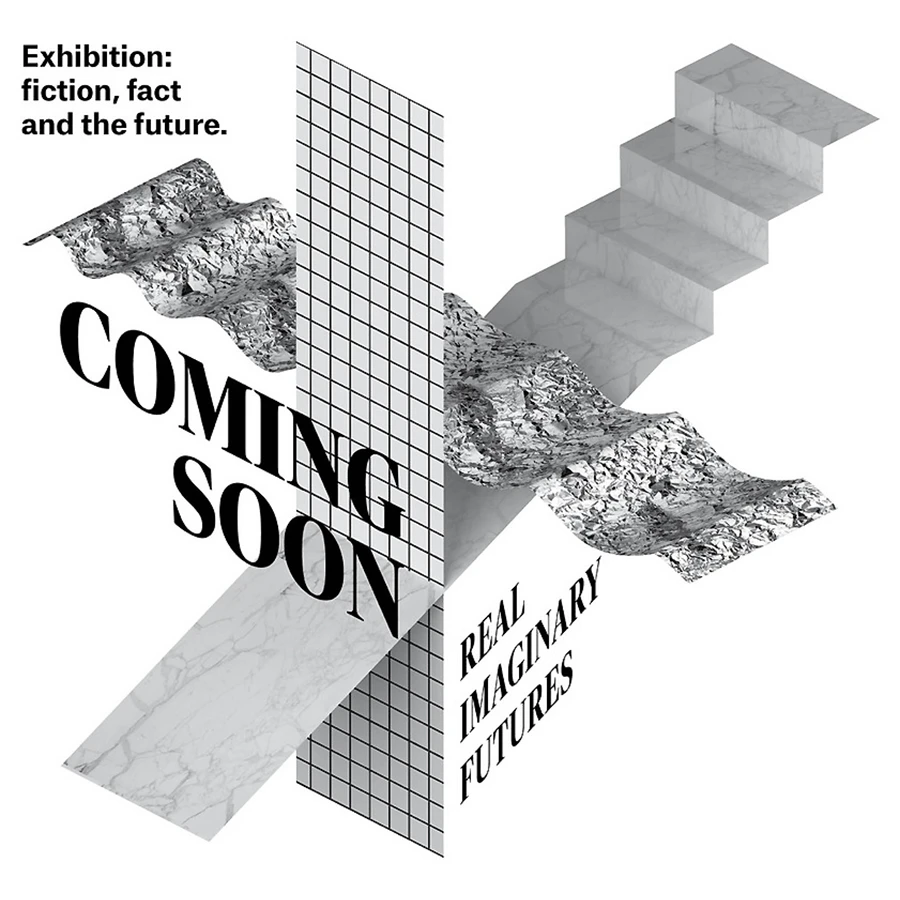
Visual identity COMING SOON: Real Imaginary Futures
Design: Loes Claessens in collaboration with Studio Roosje Klap and The Rodina
Visual identity COMING SOON: Real Imaginary Futures
Design: Loes Claessens in collaboration with Studio Roosje Klap and The Rodina
24. Mai – 2. August 2014
Bureau Europa, Maastricht
Ausstellungseinführung:
On May 24 Bureau Europa opens the exhibition COMING SOON. With landscape as a metaphor, the exhibition asks what lies at the heart of our contemporary utopias. From inspiration in the past and urgencies of the present, to projections of possible futures, the needs and virtues of our time (ecology, economy, social cohesion and technology) are extrapolated and implicitly worked into the exhibition and its parallel program.
Expressions of longing for another place, of a dream landscape, the ideal city or an alternatively organised society go far back in time. Some 500 years ago, in his 1516 publication, Utopia, Thomas Moore described a traveller’s quest on his way to a safe haven: an imaginary island isolated from the rest of the world, where one can live in an unusual reality. Such searches for an alternative are one of the prominent features of utopian narratives.
COMING SOON is an exhibition about this desire for an imaginary reality: an eclectic overview of utopian efforts, stories, and practices through the history of mankind. An extensive archive of illustrative examples, particularly from Western cultural and visual history, provides the basis for a genealogy of utopian images and ideas. In addition to this historical overview, a cinematic «Docutopia» is developed. After literature, film is considered to be the medium of choice for imagining other worlds. The spatial works in the exhibition are contemporary projections of the near future, and are more than mere representations of escapist fantasy worlds. They claim the right to exist through other ways of thinking about the structure of the world around us, and kick-starting our imaginations. The selected works are evocative and positioned between fact and fiction. COMING SOON examines the critical potential of this imaginary space (or spaces) between reality and utopian projection. The promise of change, improvement, and imagination lies at the heart of every design and is a crucial part within design disciplines.
With landscape as a metaphor, the exhibition asks what lies at the heart of our contemporary utopias? From inspiration in the past and urgencies of the present, to projections of possible futures, the needs and virtues of our time (ecology, economy, social cohesion and technology) are extrapolated and implicitly worked into the exhibition and its parallel program. It is also recognised that, despite good intentions, most utopias lead to failure. This is possibly a good thing, since it is the utopian impulse – the quest itself – that has the greatest value.
Teilnehmende:
Tomás Saraceno, Ruben Pater, Atelier Van Lieshout, Studio Smack, Studio Swine, Alicia Framis, Sandro Setola, Rachel Sussman, Samah Hijawi, MAP Architects, Julijonas Urbonas, Studio Makkink & Bey, Enzo Mari, Imme van der Haak, Theo Jansen, Arne Hendriks, DUS Architects, TD Architects, Kyra van Ineveld, N55, Anthony Lau, Nelly Ben Hayoun, WHIM Architecten, Emre Hüner, The Why Factory, Bitcaves, Dingeman Deijs, Martina Petrelli, R&Sie(n), Urban-Think Tank, El-Ab Architects, Maarten Vanden Eynde, David Benqué, Mathias Schweizer, HY Architects, OFL Architects, Ben Landau, Bas van Beek, Bureau d’Etudes, Arjen de Leeuw, Rob Voerman, Fairphone, Point Supreme Architects, MVRDV, Constant Dullaart, Persijn Broersen & Margit Lukács, Femke Herregraven, Metahaven, Jonas Staal, Dirk Vander Kooij, STEALTH. unlimited i.c.w. Kristian Lukić & Emil Jurcan, CLOUDS Architecture, Guy Ben Ner, Markus Kayser, Space Caviar, The Lowline, Evert Ypma, Elegant Embellishments, Pieter Stoutjesdijk, Dogma, PAL-V Europe & Spark, Fredrik Härén, Owen Wells, Advanced Tactics, Pierre Bismuth, Studio Orta, Helmut Smits, Life Straw, Anne Holtrop, the Why Factory, Marta Volkova & Slava Shevelenko, One Architecture, Magnus Larsson, The Seasteading Institute, Stewart Brand.
Quelle: Bureau Europa

- Institution
Bureau Europa
- Projektart
Designforschung, Ausstellung
- Bereich
Visuelle Kultur, Repräsentation, Place Branding
- Ort
Maastricht
- Jahr
2014
- Status
Abgeschlossen
- Umsetzung
Bureau Europa